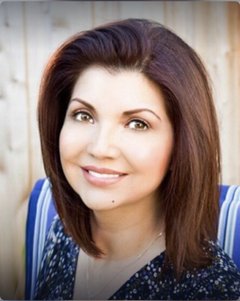
Founder & Supervising Clinician

Meet Carol

A therapist who believes people make sense, even when life doesn't.

Why I Do This Work

People Are Not Broken.

Most symptoms make sense once you understand someone's story.

That belief is the foundation of how I practice. Trauma changes the nervous system in ways that show up long after the original experience has passed, and healing begins with understanding rather than shame. When someone can finally see why they react the way they do, something shifts. Not because the reaction disappears overnight, but because it stops feeling like a mystery, or worse, a flaw.

Therapy, to me, is collaborative rather than clinical. You're not a case to manage. You're a person with a story I'm genuinely interested in understanding alongside you.

Carol Crawley, LMFT What Working Together Feels Like

Clients Often Tell Me They Finally Feel Understood.

They stop blaming themselves for reactions that used to feel confusing. Complex things become understandable. Therapy feels practical rather than abstract, and they start to learn why they respond the way they do, not just what to do differently.

Most leave sessions with hope, not because life suddenly changed, but because it finally makes sense.

What I Believe

A Few Things I Hold Onto in This Work

You are not your worst day.

Healing isn't becoming someone different.

Trauma is something that happened to you, not who you are.

Your nervous system can learn safety again.

Understanding creates lasting change.

Faith and therapy can work beautifully together, but faith is never required.

My Clinical Approach

How I Actually Work

EMDR

Helping specific memories that still feel unresolved finally settle.

Trauma-Informed Therapy

Understanding how the past continues to shape the present.

Attachment

Looking at relationship patterns formed long before this one.

Cognitive Behavioral Therapy

Noticing the thoughts that quietly drive difficult feelings.

Dialectical Behavior Therapy

Building skills for big emotions without being ruled by them.

Mindfulness

Learning to stay present instead of stuck in what already happened.

Parts Work

Making room for the different parts of you that want different things.

Somatic Awareness

Paying attention to what the body already knows.

Areas I Most Often Help With

Where I Spend Most of My Time

Beyond the Therapy Room

A Couple of Other Projects

My commitment to first responder families extends beyond this practice into a couple of educational projects.

Education & Support

Love on the Thin Line

Educational resources and support for first responders, spouses, and families navigating the unique challenges of first responder life.

Visit Love on the Thin Line
Coaching & Education

Thin Line Coach & Counseling

Specialized education, coaching, and resources for first responders and those who serve alongside them.

Learn More
Outside the Office

A Little About Me

When I'm not in session, you'll usually find me out in my backyard garden, coffee in one hand and often my Bible in the other. It's a small patch of quiet, and it's where I do a lot of my own settling. The rest of my time tends to go to my family, especially my grandchildren, who have a way of pulling me straight into the present moment. The same things that help my clients calm their nervous systems tend to help mine too.

Credentials

Licensure & Training

LicenseLMFT, California #130458
Org NPI1518885029
Modality TrainingEMDR Certified
RoleFounder & Supervising Clinician
PracticeCrawley Integrative Marriage and Family Therapy, A Professional Corporation
Common Questions

Questions People Ask Me

Why did you become a therapist?
I've always believed people make more sense than we give them credit for. Becoming a therapist let me spend my career helping people see that in themselves.
What kinds of clients do you enjoy working with?
I especially enjoy working with people navigating complex trauma, first responders and their families, and couples rebuilding trust after betrayal. That said, I work with a wide range of concerns.
Do I have to be Christian?
No. Faith is woven into the culture of this practice, but it's never required of clients, and it's never imposed in session.
Do you work with first responders?
Yes. It's one of the areas I most often work with, and one I understand deeply through my own background.
What if therapy hasn't helped me before?
That's a common and completely valid concern. Fit matters as much as approach. A consultation is a good way to see whether this feels different before committing further.

You Don't Have To Have Everything Figured Out Before Reaching Out.

Sometimes the hardest part is simply taking the first step.